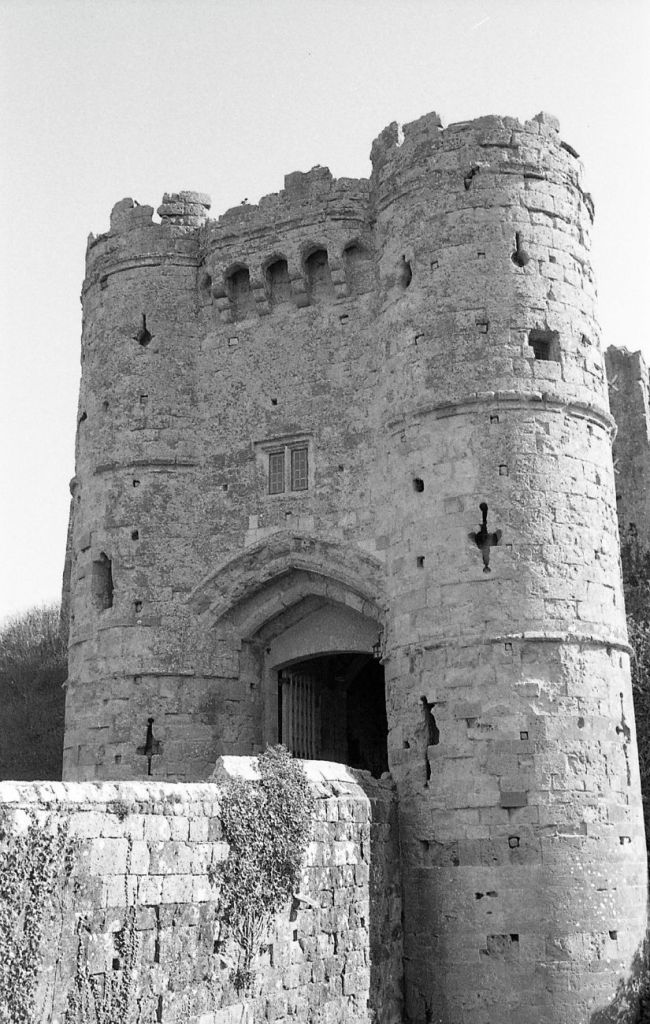
Continuing on directly from my previous post, the following day saw me at Carisbrooke Castle on the Isle of Wight. I still had half a roll of Ilford HP5 in the camera so once inside I tried to visit all of the inside things first. There is the Chapel of St Nicholas in Castro. It was founded by William the conqueror in 1060, the building that stands today was built in the 13th Century, and rebuilt in 1738. The interior is below, and in what one may call the porch a bust that commemorates Charles 1st. Carisbrooke is perhaps best known for it’s connection with Charles, he was imprisoned here awaiting trial, below is a photo of the window from which he tried to escape.
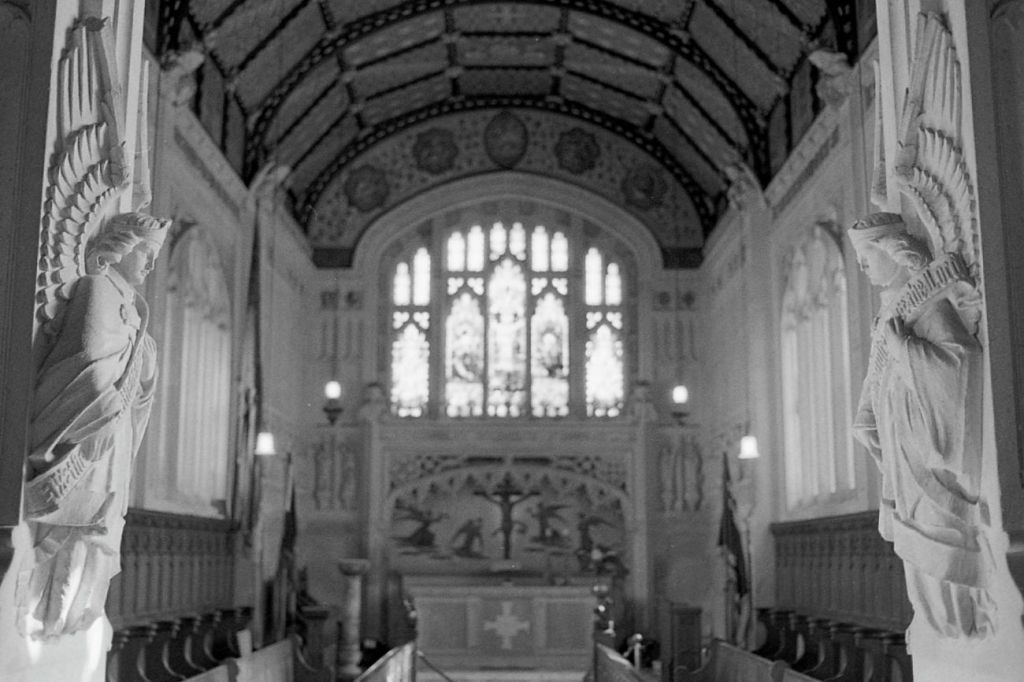
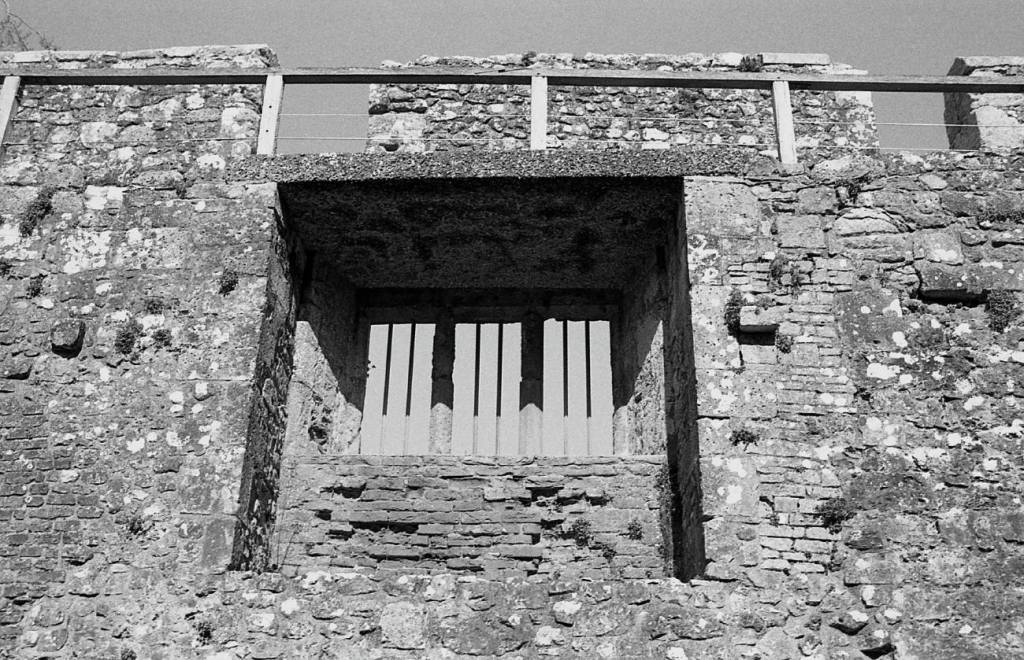
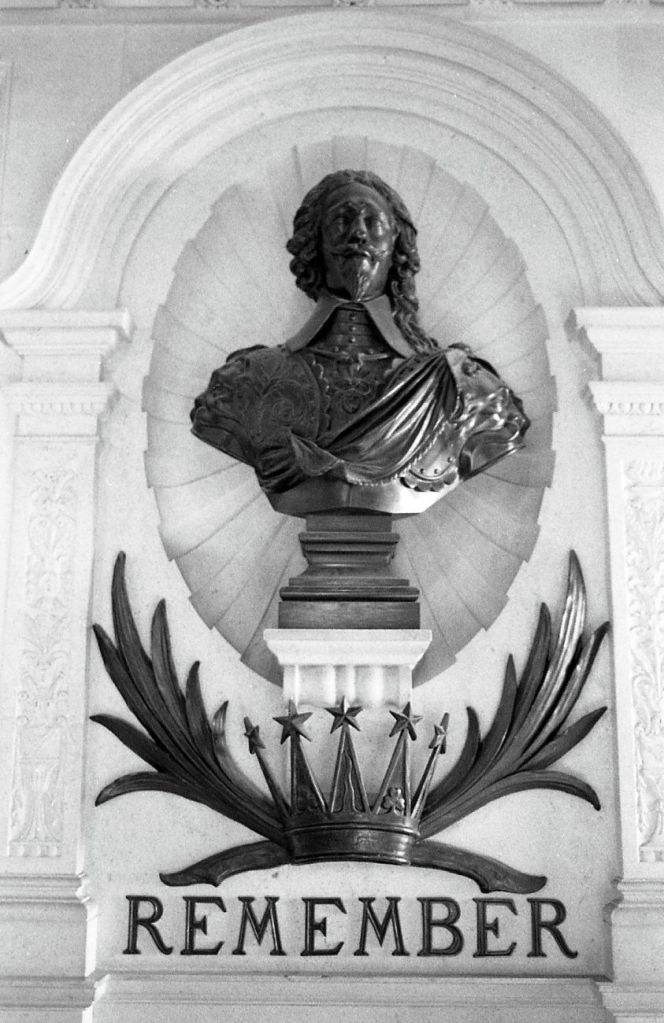
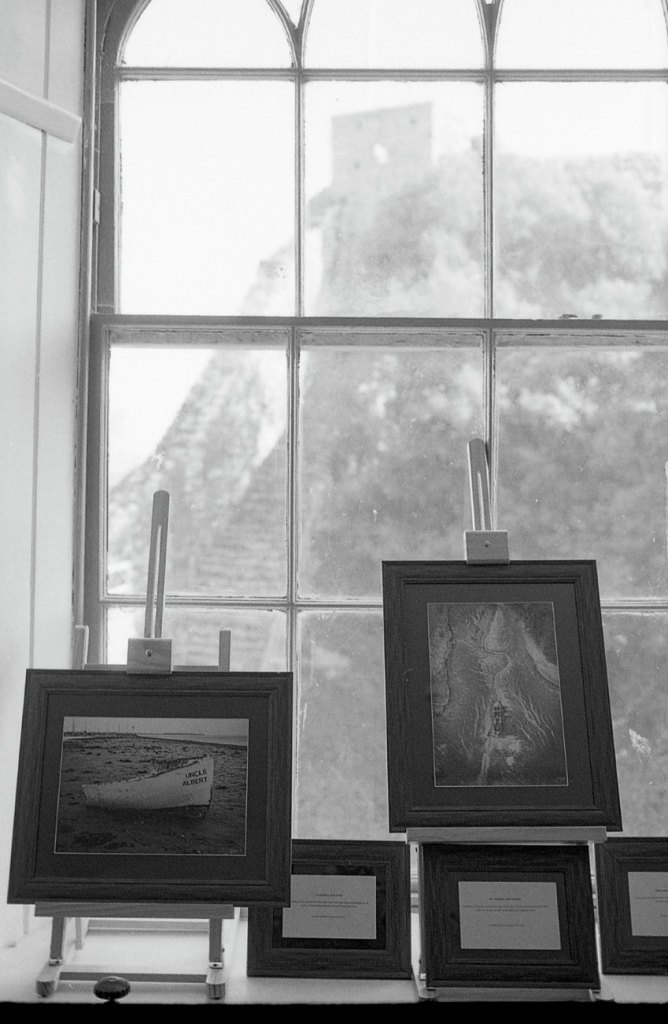
There is also a museum within the castle, and by the time I’d finished in the chapel it was open. It’s one of those situations where the museum, although within the castle run by English Heritage, is run by a collection of volunteers and opens later. It was worth the visit. In one room there was a small photography exhibit by an Island photographer. Stupidly I never kept his details. The work, mostly landscape was what I would call “in a modern manner” -meaning colour, digital, a little tinkering with levels and saturation in photoshop. Nothing wrong with any of that, but nothing that spoke to me either. As for the museum, the photo of the cabinet below was typical.
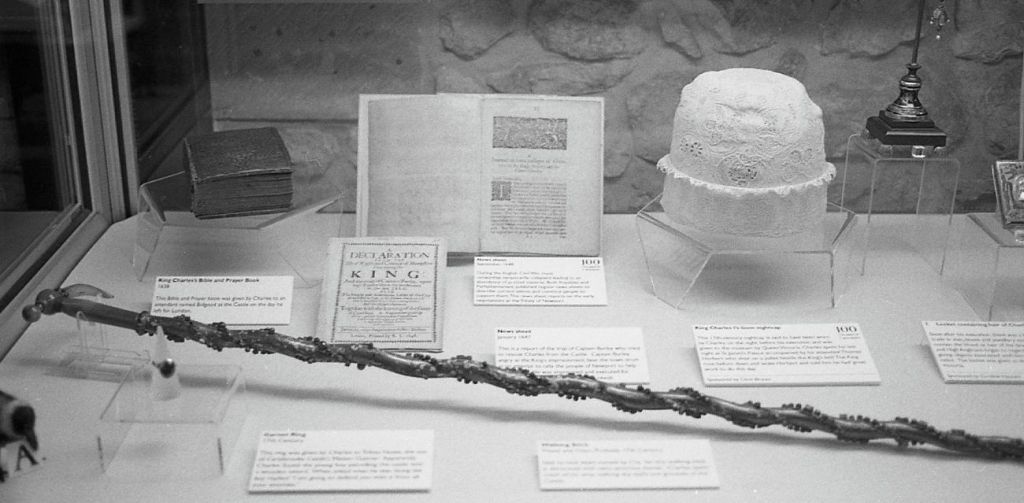
Above artifacts from King Charles 1st: His Bible, walking cane, a ring and sleeping cap.
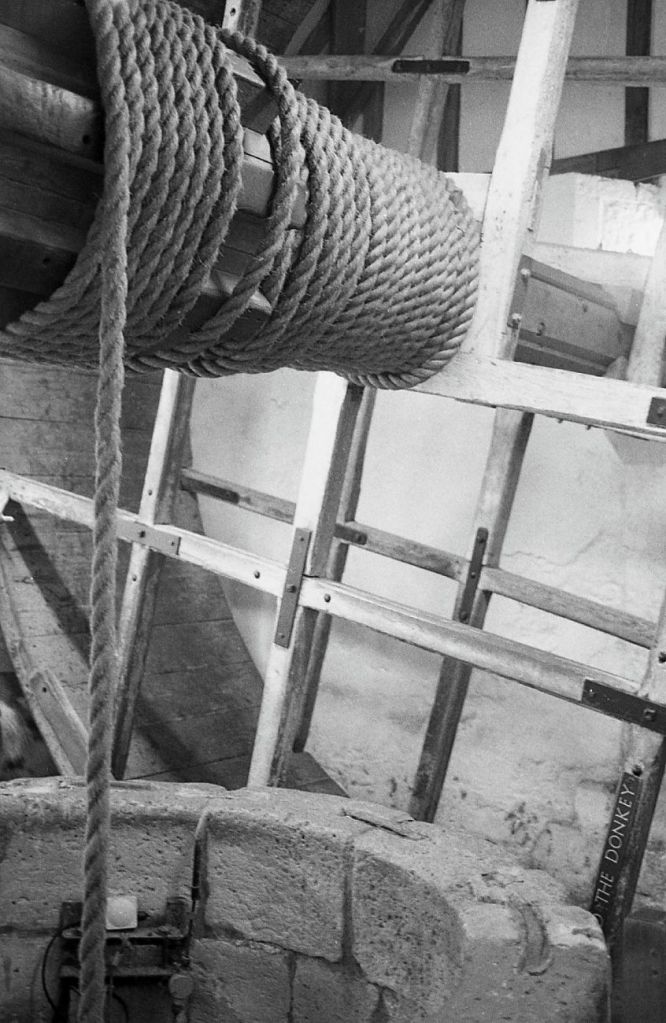
Carisbrooke Caste is built on the top of a hill, almost in the centre of the Isle of Wight. Water was an obvious requirement and so a well was dug, luckily a good source found – sadly it’s 49 meters deep! By the 16th century a well house containing a huge Oak wheel (right) was built. It needs to be turned for 255 meters to draw one bucket of water. Originally prisoners would have done this, but since 1696 it’s been done with donkey’s. I doubt Charles was one of the prisoners has had to “tread the wheel” although in a funny way he is “remembered” here. When sending out letters, trying to escape he signed those letters “J”. All the donkey’s at Carisbrooke since then have been given names starting with J. Today the dokey’s are still here, but they only demonstrate for about 30 seconds a few times a day!

