
All of the, give or take, 50 years I’ve been messing about in darkrooms, the number one rule has always been, don’t contaminate (mix) the chemicals! I was surprised to discover then that monobath developers have been about since 1800 and something! So what is a monobath? Does it work and if so, how? Put simply a monobath is developer and fixer mixed together in one (mono) solution (bath). The idea is that you pop your film in the tank, pour in the liquid, after the allotted time, pour out, wash and hang to dry. That’s it! What’s happening is that a quite fast acting developer hits the emulsion of the film and develops before the effect of the slower acting fixer gets to work and, well, fixes.
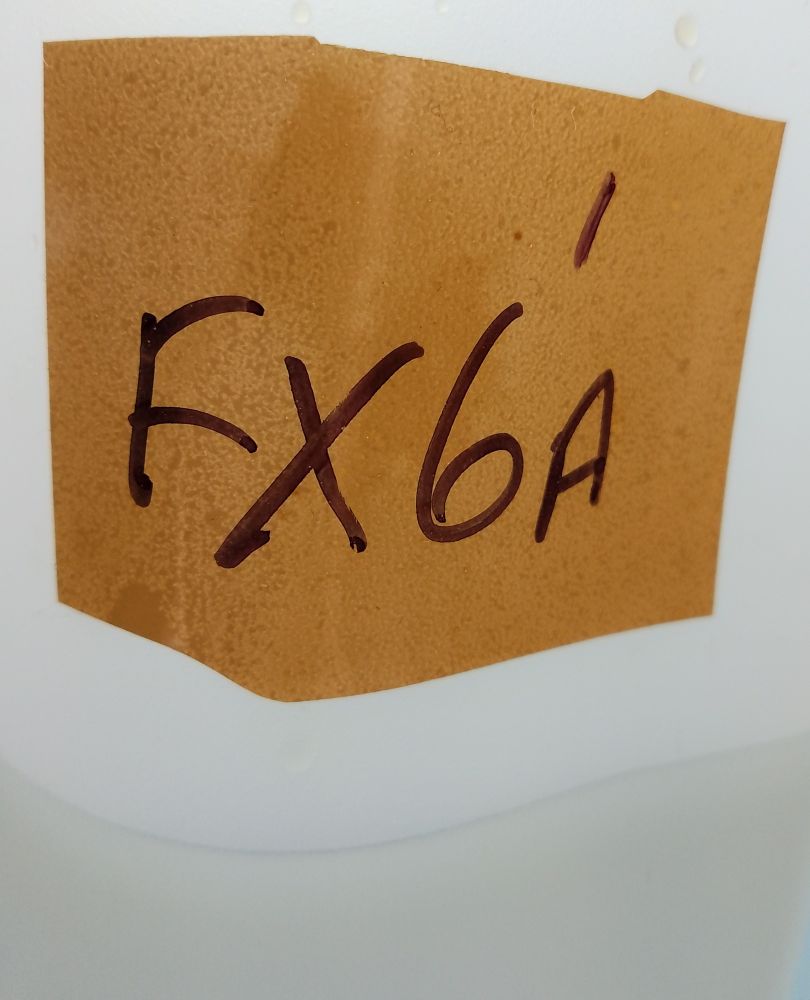
I mixed up 500ml of Crawley’s FX6a Monobath to have a go. Here is the formula (for 1 litre):
Sodium sulphite 50g
Hydroquinone 12g
Phenidone 1g
Sodium hydroxide 10g
Sodium thiosulphate 90g
Water to 1 Ltr

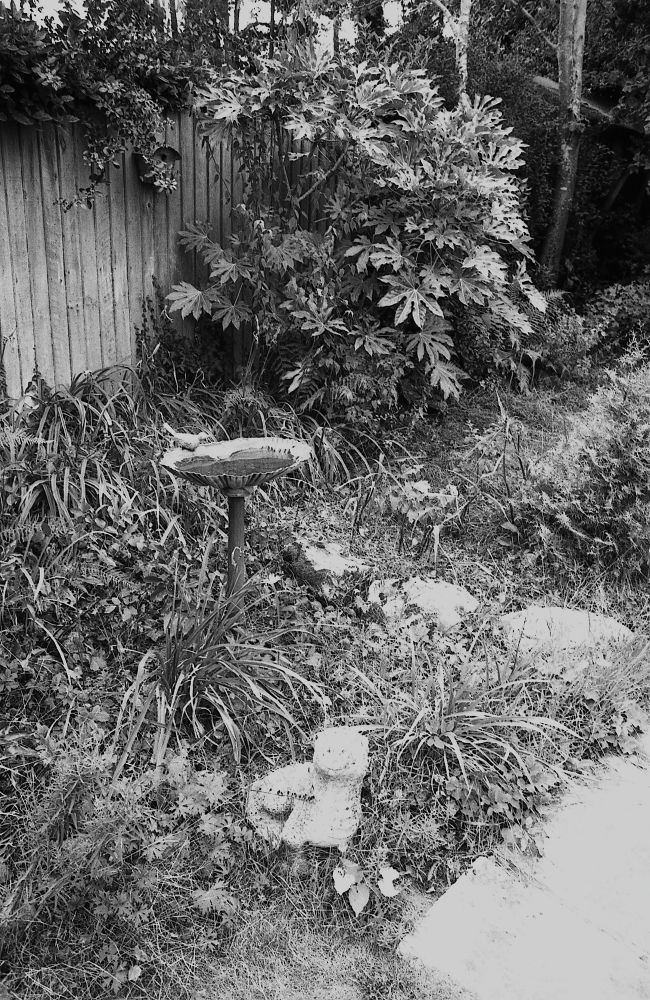
I used a short length of Ilford Delta 100 for this experiment. I did 6 mins at 21°C. (I did 21°C as that’s what the cold tap water was that day!). It works! It still amazes me that I can even make a developer, even more so when it actually works!! I made the image below and took several frames, I developed a few of those frames in FX55 (my usual brew) as a comparison. The rest of the film I developed in the monobath.

The results: Lets have a closer look:
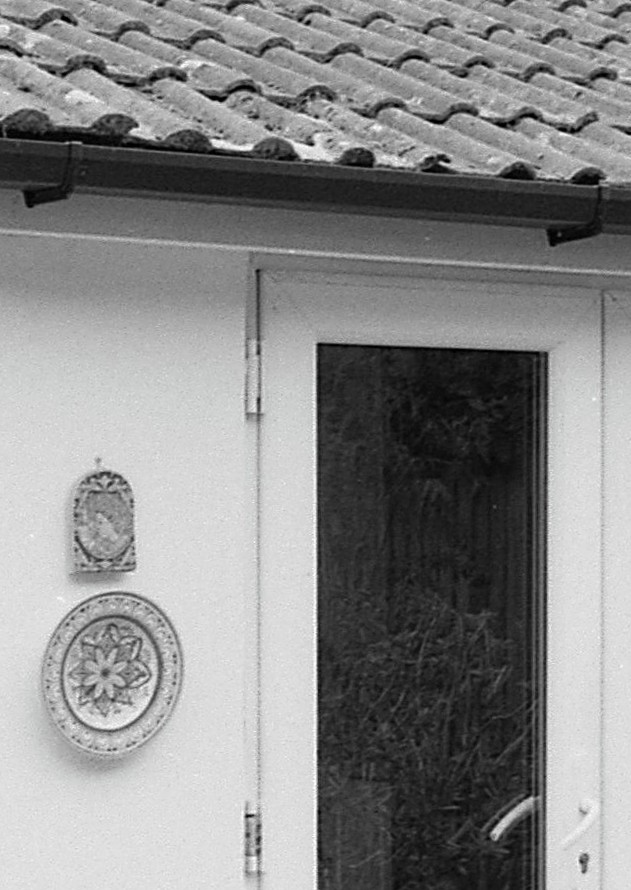
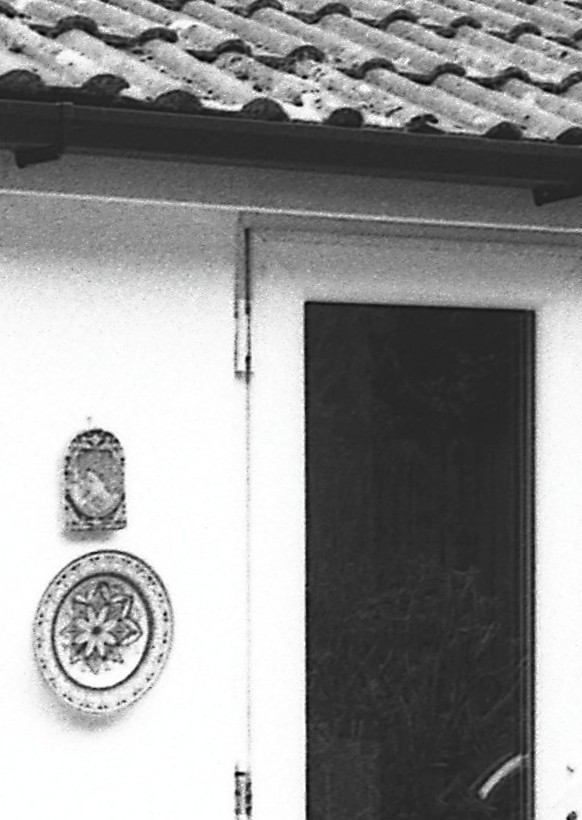
Above (left) is a crop from the larger image developed in FX55, this was “clipped” off from the start of the same reel, the rest of which was developed in 6aMono. I think this result says it all. The Monobath certainly does the job and develops and fixes the film in just 6 mins. This would be great for a newspaper or the like, in a world where the digital camera hadn’t been invented yet! It’s more contrasty, it shows more grain and this has the effect of making it look more sharp. But there is a loss of tone. I can always add a bit of contrast in photoshop, or even go up a grade in printing, but I can’t put in detail that’s been lost.
Conclusion: I like the idea of the monobath, if one had film to develop “on the run” then this would be a choice. If I use it again, and I might as it’s reusable and I reckon I’d get another 2 or 3 rolls though it, I’d go for a lower temperature, apparently that would help drop the contrast a bit. I rated the 100 speed film at 50 as it is expected that 6a looses film speed, but if I shot more I’d rate at 64 I think. The other surprise, perhaps that’s too strong a word, was how much by-product comes out of about 20 exposures worth of film. On pouring out the solution it was the colour of dark tea! After 24 hours it settled but look how much gunk there is for effectively half a roll of 35mm!!
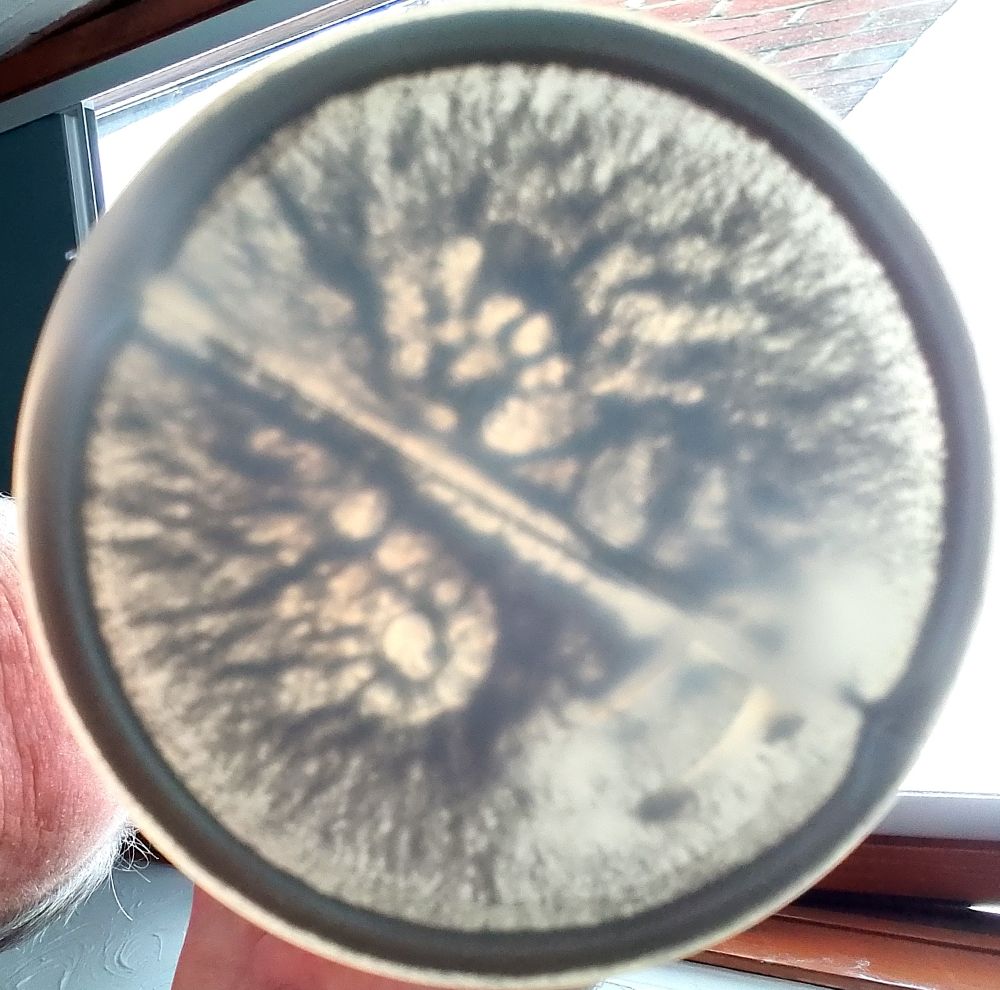
Finally I am indebted to John Finch at Pictorial Planet (see blogs I read), without his website and great knowledge it’s very doubtful I’d be doing anything other than using Ilfosol (not that there is anything wrong with Ilfosol at all – I used it for years) but this is more fun!! Thanks John.
 S.H.O.U.T.
In the 1960s, there was MONOPHEN from Ilford.
BERGGER has recently lauched their ONE : interesting product. Tests are necessary.
LikeLiked by 1 person
Hello! I don’t remember Monophen, and hadn’t heard about the Bergger one, although I’ve always fancied trying a roll or two of their film! The main mix I remember in recent times was the Cinestill/Film Photography Project D96. They both seem to be D96 and both come in the same packaging so I assume it’s the same stuff with a different label! Never tried either. It seems like a nice idea, quick and easy but with consequences in contrast, tone and control, all of which in my opinion are important in B/W!! – All best wishes – Andy
LikeLike
I had forgotten D96 ! I used it once (and I made mistakes).
The Bergger One product (https://bergger.com/fr/accueil/151-bergger-one-monobain-1l.html) is costly (c. 20 european bucks here in Frankreich), and one must read carefully the technical infos.
I have gone back to D76 (the Adox version).
Have a nice weekend ! JFB
LikeLiked by 1 person
Hi JFB! I liked D76 (or as I used ID11 – same stuff!) I think the last roll I used 1+3, but that may be a dodgy memory!! Have a great weekend too! Cheers Andy
LikeLike