Last autumn I purchased my first ever bottle of Rodinal, Adonal, as made by Adox to be exact. Same recipe, give or take, different manufacturer. I liked the idea of it’s economy, and it’s legendary shelf life more. I had just returned from an autumn break to London where I’d shot quite a bit of film, so gave it a good blast. Trouble was I didn’t overly like the results. It’s a well known fact that it’s a “true grain” developer, some would just say grainy. Generally I don’t like grain and try to keep it to a minimum where possible. Rather stupidly I developed mostly 400 speed in it, and surprise surprise, didn’t like the results much. The bottle got shelved, I got through another bottle of Ilfosol, before discovering D23!
I learned about D23 from John Finch at Pictorial Planet, (link in my “blogs I read page”), and it was there that recently he posted a video about a “Rodinal Grain Reducer” – would this “magic juice” work for me? Would it change my mind about Rodinal? Only one way to find out…
I found myself wanting to test a couple of things, so I ran an entire fresh 36 exp FP4 through, seems a waste but if you need to test, there is no other way. I consoled myself with the idea that if I got better negatives from this point on, it would be worth it. I blasted through the entire film on the same shot.
First developing test was Rodinal 1+50, 13.5 mins, 21 degrees Ilford agitation. FP4 Plus exposed as 100 ISO.
Second test was the same as above, but with 10ml of the “grain reducer” added, and the developing time extended to 17 mins. It was suggested that it may need 25% longer. Density wise I think that’s spot on, looking at the negs on a light box I couldn’t tell which was which – they seem identical.
So what of the results? I scanned all my tests at 3200 dpi (higher than I usually do) and treated them all exactly the same. First a crop from Rodinal 1+50.
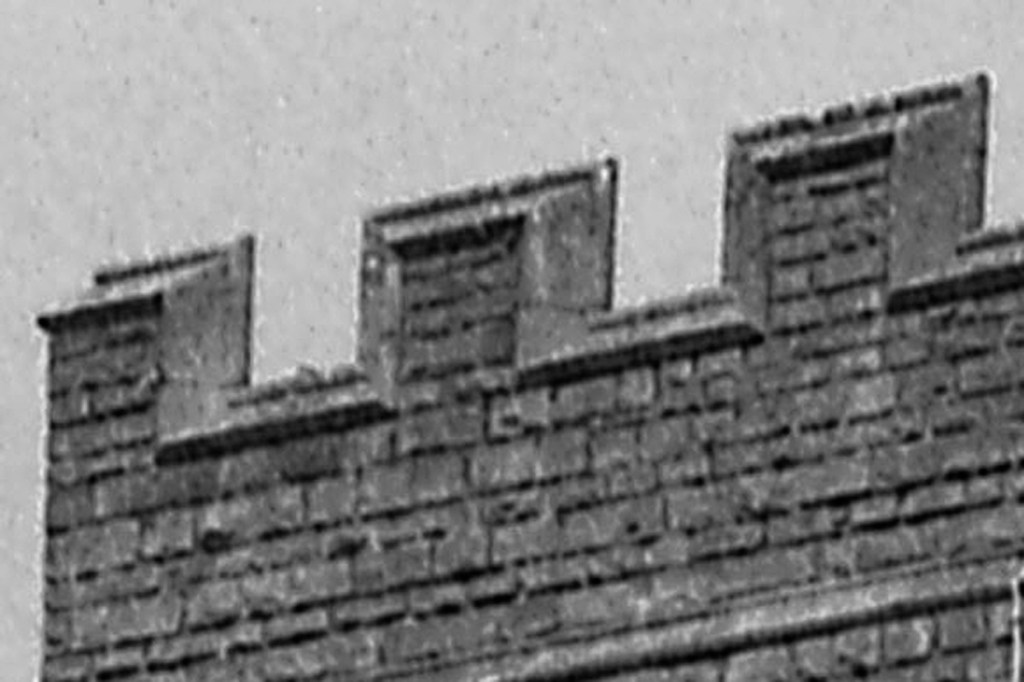
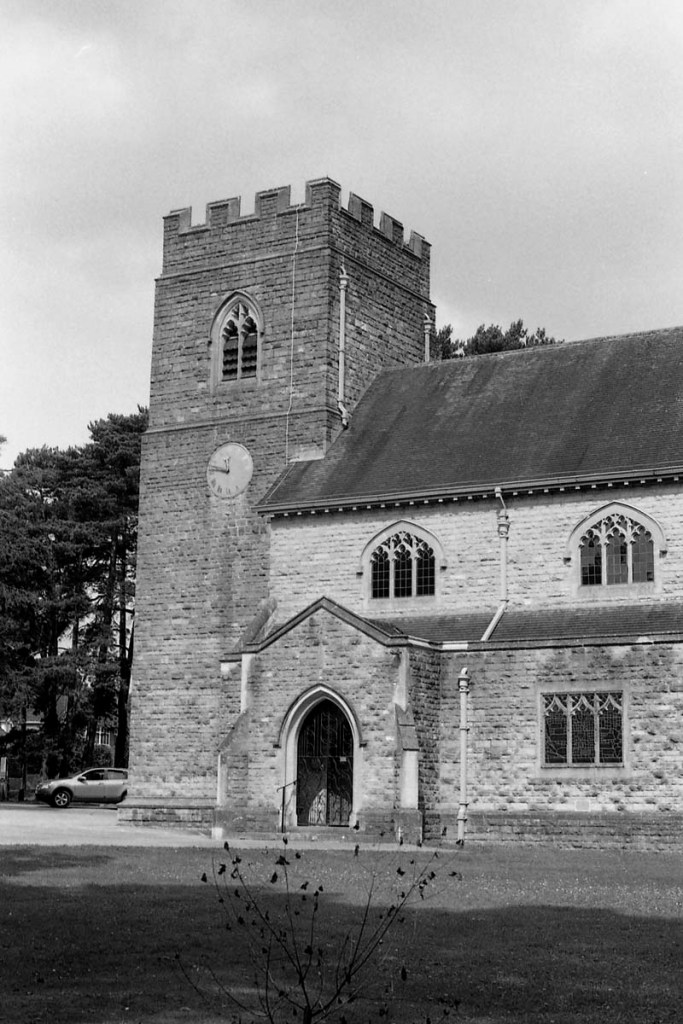
This would be “poster size print” from 35mm, the image at the top of this post is the full 35mm neg. Next the same, but with 10ml of the grain reducer added and the developing time extended to 17mins.

I flicked back and forth, then decided to put both side by side: Grain reduced on the left, regular on the right.

Yes they are that way around! I checked, and double checked. On the left (above) is the grain reduced – to my eye seems to have MORE grain not less! I think this makes it have a sharper look, and also perhaps a touch more contrast. The main thing is though MORE grain not less!! The other thing I note is that I like Rodinal much more with FP4 than I did with anything faster. Again these would be huge enlargements and from 35mm, perhaps too big. Will I use this combo again? Yes. Based on this test I wouldn’t bother with the so called grain reducer – I’d just use 1+50 as intended. I’d use it when I wanted to prioritise sharpness, over grain, and/or be happy with a slightly grittier look.
I’m rather pleased with the “shock” result, as it means the testing was worth while, and I’ve also discovered that with FP4, I’ll get more sharpness, due to a bit more gritty grain, but at regular size printing, say 8×10 it will be fine! Rodinal stays on my shelf for those instances, and is NOT going in the bin!
For the record the grain reducer recipe is:
100ml Water
1 gram Sodium Chloride*
1.8 Grams of Boric Acid
1.2 Grams of Borax
*With the Sodium Chloride (Table Salt – purest you can get) I used 99.9% Sodium Chloride to avoid additives and fillers!
The next thing I need to try is dilutions: 1+50 (done tick!) 1+100 and 1+200 – back to the sink!
 S.H.O.U.T.
I’ve never been a big fan of Rodinal. I’ve used gallons of it – but only because it keeps forever. I am a very ‘intermittent’ photographer – I am going through a very long unproductive patch at the moment – but even when it was occupying a lot of my time, I still seemed to struggle with throwing most of my developers away because they’d oxidised. Bad planning on my part, I expect – I should have saved the films up and done a decent batch with a small bottle of concentrate instead of opening a litre, using 50ml and a month later throwing the rest away 😦
Rodinal was the only thing that would cope with my erratic developing regime – for longevity, it was great! For picture quality… it never inspired me. It didn’t even seem to give particularly good acutance, the characteristic it is supposed to be known for. I did a lot of experiments with it on several films and other developers, too. My conclusions, for what they are worth, was that many of the ‘classic’ developers earned reputations for various effects they had on the old fashioned emulsions. The trouble with modern emulsions is that they seem to be much more resistant to being manipulated – and I think FP4 plus is one of the worst (best?) – in the sense that ‘it is what it is’ and it seems quite resistant to having its nature changed. It is already fine grained and high acutance and not many developers or development techniques seem to change it much. You could make it worse, of course, if you boil it up in concentrate print developer you’ll get some grain… but other effect are always very subtle and sometimes imperceptible. Just my humble thoughts.
Have you looked at project Ferrania? Some of the ex workers from the defunct company bought up manufacturing equipment with the hope, one day, of reintroducing colour slide film. It seems to have been in the making for a very long time and may have stalled, I haven’t read up on it for a long while – but as a step in the process, they did make small batches of a classic 1950s slow black and white film. I fancied buying some of that (when I get around to it…which I probably never will) and trying some of these old formulas out. I bet the film would be much more responsive.
LikeLike
I’ve never been a big fan of Rodinal. I’ve used gallons of it – but only because it keeps forever. I am a very ‘intermittent’ photographer – I am going through a very long unproductive patch at the moment – but even when it was occupying a lot of my time, I still seemed to struggle with throwing most of my developers away because they’d oxidised. Bad planning on my part, I expect – I should have saved the films up and done a decent batch with a small bottle of concentrate instead of opening a litre, using 50ml and a month later throwing the rest away 😦
Rodinal was the only thing that would cope with my erratic developing regime – for longevity, it was great! For picture quality… it never inspired me. It didn’t even seem to give particularly good acutance, the characteristic it is supposed to be known for. I did a lot of experiments with it on several films and other developers, too. My conclusions, for what they are worth, was that many of the ‘classic’ developers earned reputations for various effects they had on the old fashioned emulsions. The trouble with modern emulsions is that they seem to be much more resistant to being manipulated – and I think FP4 plus is one of the worst (best?) – in the sense that ‘it is what it is’ and it seems quite resistant to having its nature changed. It is already fine grained and high acutance and not many developers or development techniques seem to change it much. You could make it worse, of course, if you boil it up in concentrate print developer you’ll get some grain… but other effect are always very subtle and sometimes imperceptible. Just my humble thoughts.
Have you looked at project Ferrania? Some of the ex workers from the defunct company bought up manufacturing equipment with the hope, one day, of reintroducing colour slide film. It seems to have been in the making for a very long time and may have stalled, I haven’t read up on it for a long while – but as a step in the process, they did make small batches of a classic 1950s slow black and white film. I fancied buying some of that (when I get around to it…which I probably never will) and trying some of these old formulas out. I bet the film would be much more responsive.
LikeLiked by 1 person
Hello!
I’m tending to agree with you in part – I’m moving towards FP4 being my go to film. That’s not to say I won’t try or use others, but FP4 always performs well for me. The test I did with the “Grain Reducer” surprised me, in the wrong direction, but FP4 in regular 1:50 pleased me, and prevented me from dumping the bottle! I would have agreed with you more about (not) changing FP4, except for another test I just did that I’ll post soon – watch this space!
I do know about the “Ferrania” project. I was excited more about the prospect of an E6 film, especially as they were mentioning Super 8 and 16mm!! I did buy 3 rolls of the P30, that came out first, part to support them and show interest, but also to try it out of curiosity. In the end I didn’t like it much – it was one of those where I thought “This is harder to get and costs more than FP4 – and at best I like it the same or maybe less, so I’ll stick with FP4!”. I see they have now released an Ortho film, so I may give that a try at some point. The E6 still looks as far off as ever from what I can tell – shame.
I did a post early on with the P30 https://wordpress.com/post/andysphotoblog.org/161
Cheers Andy
LikeLike