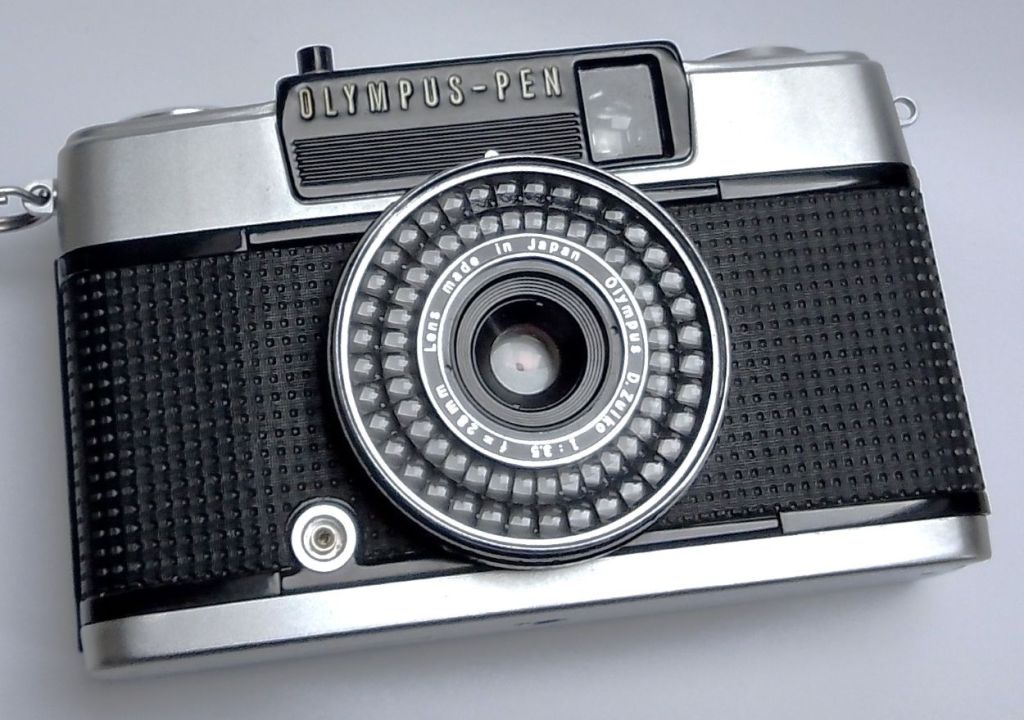
The Pen series of cameras are well known and liked. Designed by the late, great Maitani Yoshihisa, the Olympus designer who gave us the OM, XA, and Pen cameras. What a legacy! I tried an EE-2 a couple of years back – you can read about that here: Olympus EE-2.
This time however I’ve found an EE-3. I was slightly surprised to find out that this model was manufactured between 1973-1983. It feels more like a 60’s camera, but then the original Pen was indeed introduced in 1959 and didn’t really change that much. I’m equally surprised that they kept on going until ’83 with this model and indeed in ’81 introduced the Pen EF (Electronic Flash). It’s interesting to see the progression from that to the C-AF (the same year!!) and the popular AF-1 (Infinity) in ’86.
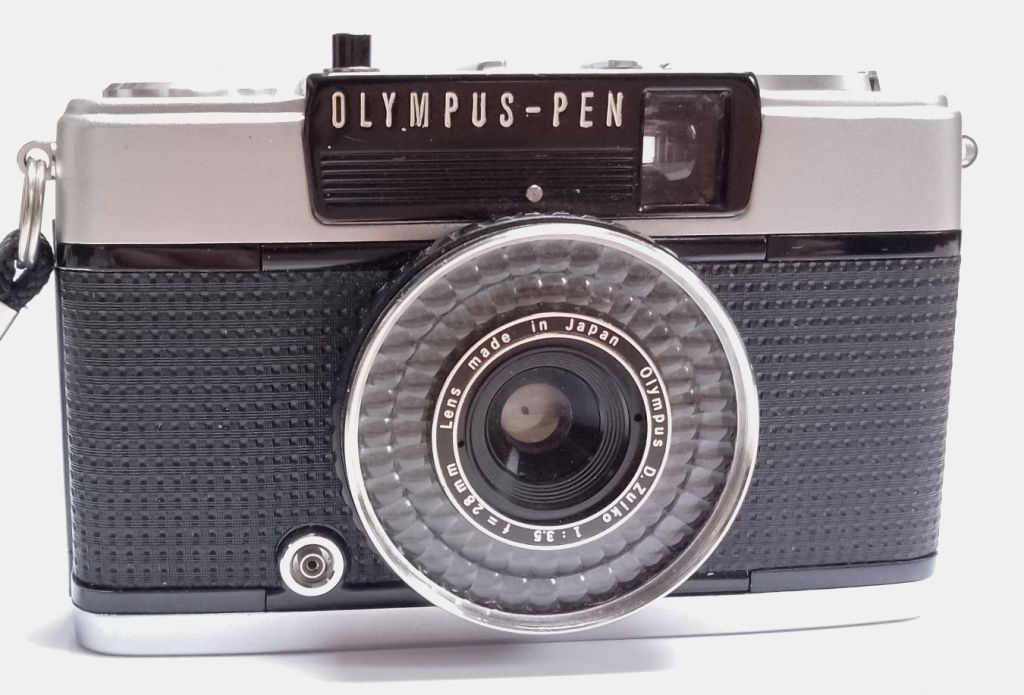
For the record it’s a half frame camera. Meaning that it uses only half a frame of regular 35mm film at a time – a 24 exposure film therefore becomes a 48. That of course reduces the quality, however the excellent Zukio-D 28mm f3.5 lenses helps to compensate. In the photo to the right you can see around the lens is the “Electronic Eye” and that’s where the EE in the name comes from.
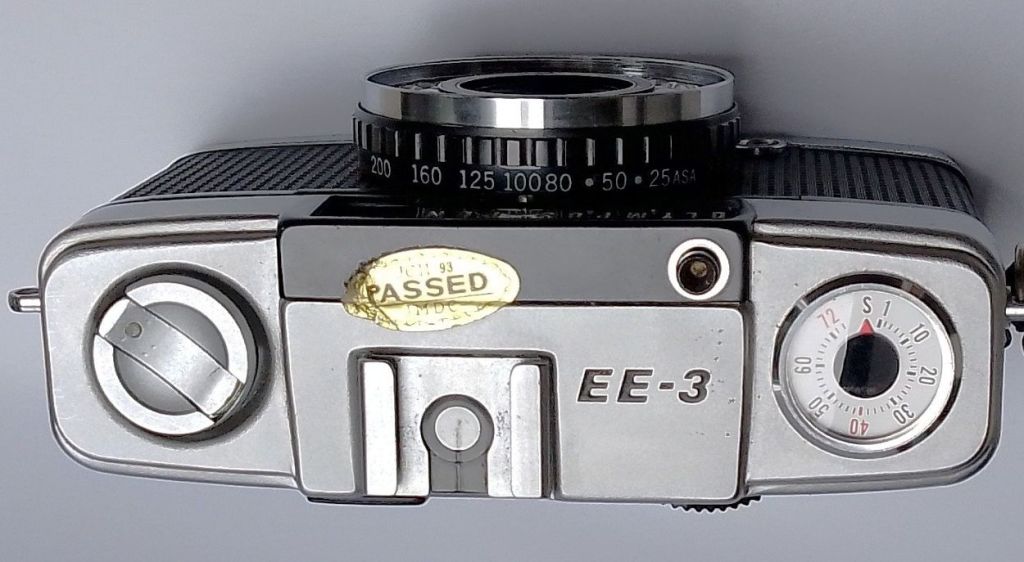
The top plate is simple and clean. The rewind crank, a hot shoe, above the “3” is the shutter button, able to take a mechanical cable release should you wish. Then on the far right, the rather nice frame counter – nicer than most in my opinion. Notice it gets to 72! While mentioning the flash, this is the main (only) difference between the earlier EE-2, and this model. Here the Olympus, so called, “flashmatic” system is included.
In the second photo you can make out a marker above the top centre of the lens, that is the setting point. In the image above you can see that I’ve set it to 100 ASA (and it is marked ASA!). That calibrates the “Electronic Eye” to give me the correct exposure. It can go as low as 25 asa, for the now defunct Kodachrome 25 I assume. It goes up to 400. High speed in 1973! However if you keep turning you end up with aperture settings from f3.5 – f22, and if you keep turning again you end up with markings in meters, specifically for the Olympus GN14 Flash.
With a bit of a fiddle it’s possible to un-clip the pressure plate inside, peek at the back usually hidden side and there is a code. Mine is K98. The “K” is the code for the production plant. I don’t think that’s publicly known? The 9 is the year. This model was manufactured from ’73 to ’83 so that’s 1979, and the 8 is the month – August.
Well you know the routine by now… in with a roll of Ilford Delta 100, that’s my bulk load of choice at the moment…..

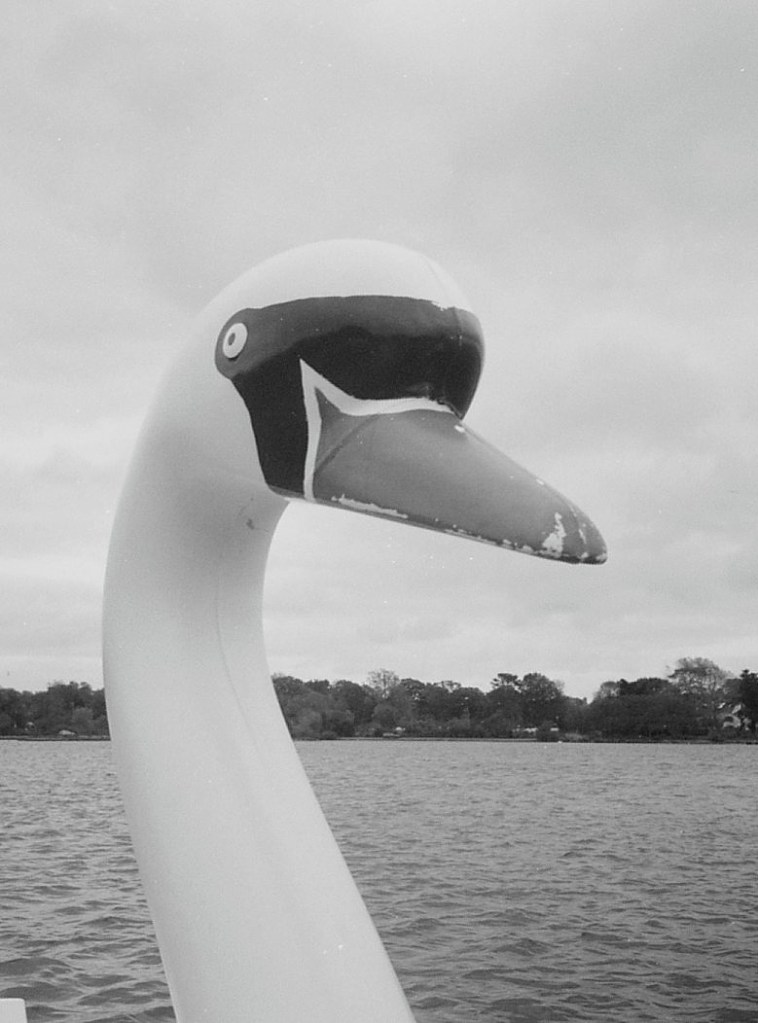

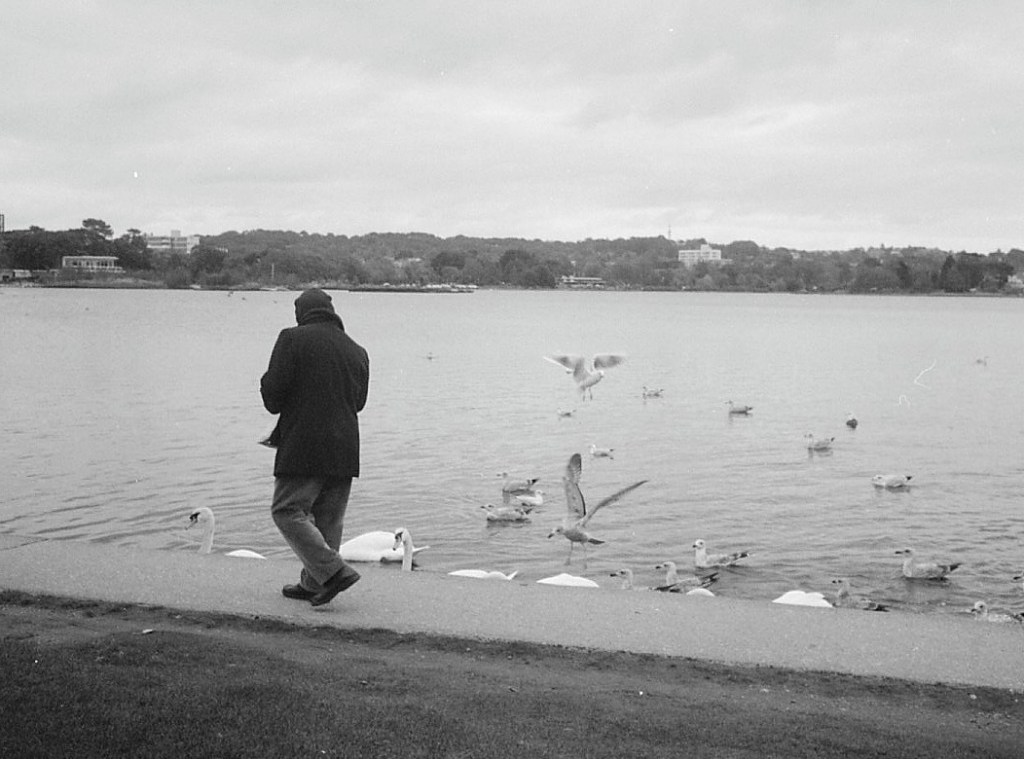
A funny thing happens when I use half-frame, normally I most often shoot landscape, with just a few vertical shots on a roll – this reverses when I use a pen. Strangely I just seem to “see” in portrait mode – without thinking about it! Above the only landscape shot on this roll.

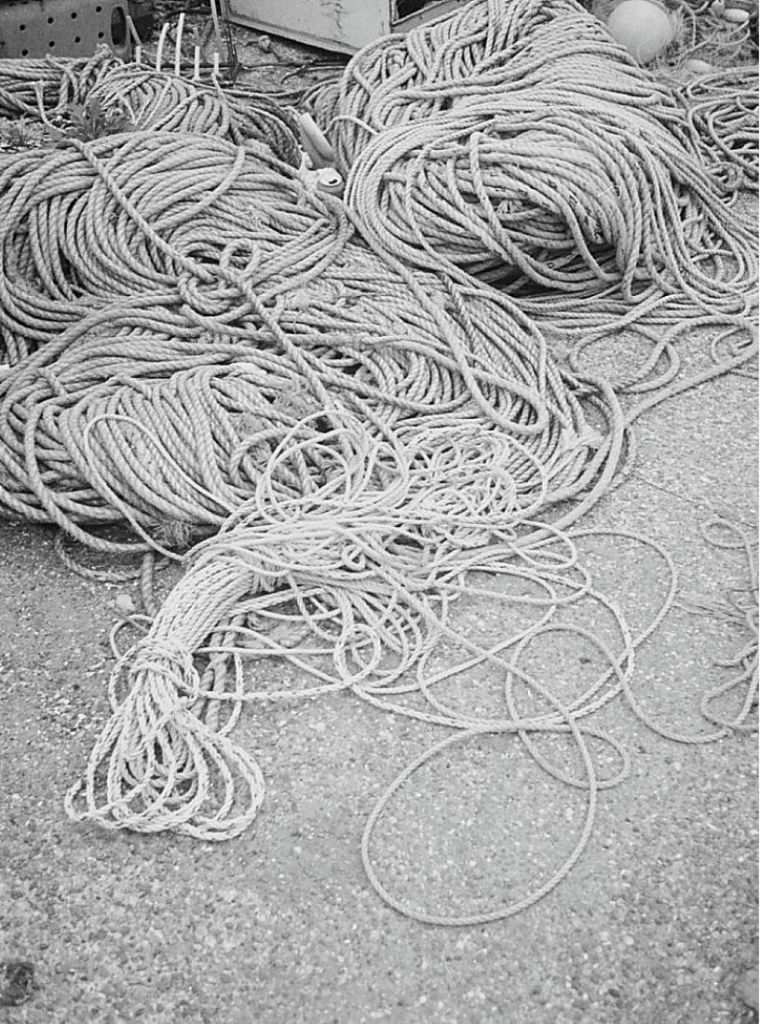
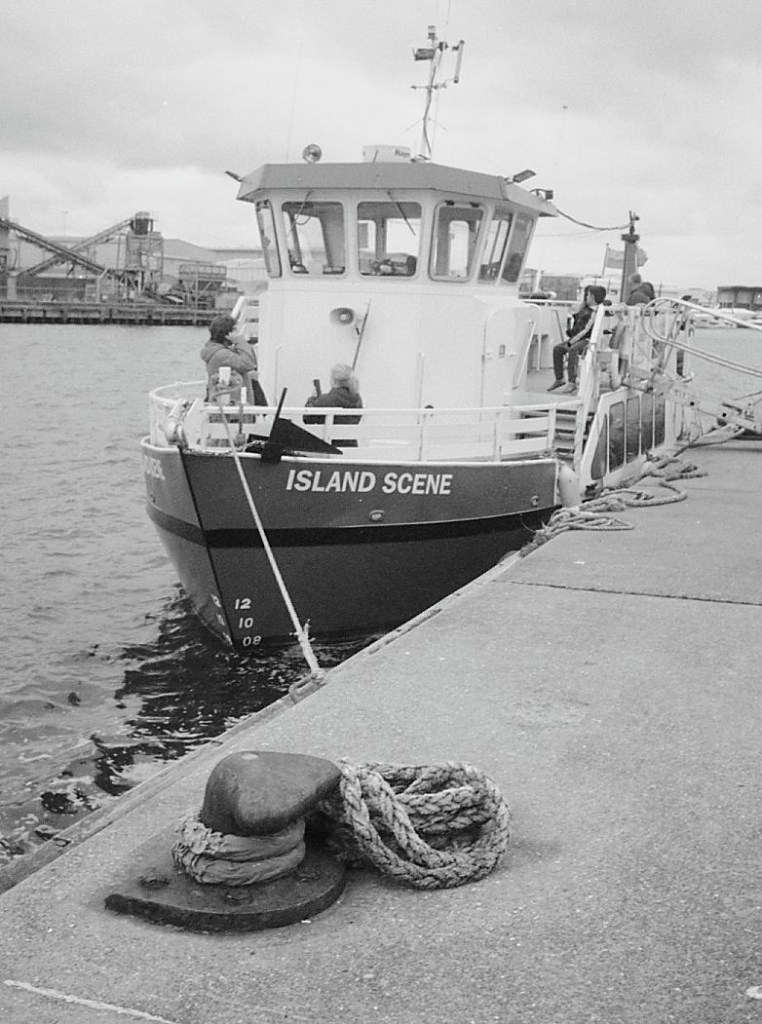
My final note is that the bright line viewfinder is cautious. Meaning you get more than you frame. In the left hand image above, according to the finder I cropped off the top of the building and the ladies feet – both are well in the neg. I wonder how many decapitations that saved over the years!! A fun camera to use, and one I shall keep to have a play with again.
Chatter: Film developed in FX55
 S.H.O.U.T.
Olympus was interesting because while they innovated in some areas (OM-1, XA), they were content to keep old technology going longer than expected, the case being the Pen EE-3. By the 70’s selenium was out with pretty much every other Japanese maker, yet Olympus kept it until the mid-80’s with this camera and the Trip. Plus, at the end of the 70’s/early 80’s they developed brand new cameras using selenium meters, the Pen EF you mentioned, and the XA1! I’m guessing that Olympus kept selenium in play because it was cheap, and it helped keep the cost down on those cheaper cameras like the Pen EE-3/Pen EF/Trip/XA. If it ain’t broke, don’t fix it.
LikeLiked by 1 person
Hi Shawn, yes it almost feels like they are from a previous age in some ways, rather than the 80’s. I think you hit the nail on the head when you say “if it ‘aint broke don’t fix it”! I did enjoy the EE though so I may keep that one for a while! Cheers and best wishes Andy
LikeLiked by 1 person